Why Do Soap Dispensers Stop Working Mid-Use?
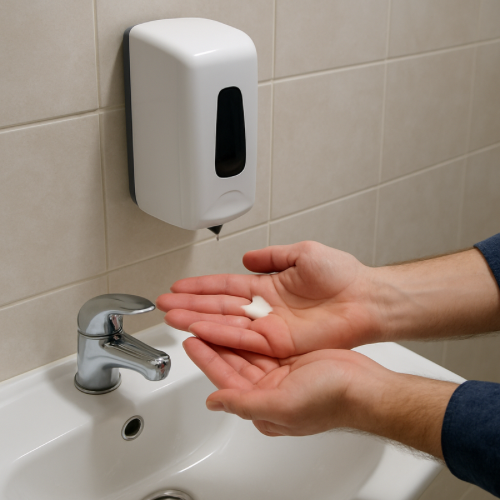
You place your hands under a soap dispenser, it starts dispensing—and then suddenly stops before you get enough soap. You try again, and it may work briefly, then stop again.
This can feel like the dispenser is broken, but in many cases, it is reacting to how its sensor and pump system are designed to work.
The Short Answer
Soap dispensers stop working mid-use because they rely on short pump cycles and sensor detection that can reset if your hands move or the cycle completes.
How Automatic Soap Dispensers Work
Most automatic soap dispensers use infrared sensors to detect your hands. When your hands are in the correct position, the sensor activates a small internal pump.
The pump releases a fixed amount of soap during a short cycle, then stops.
This is similar to how hand dryers turn off based on detection and timing, where the system responds to signals rather than how much you actually need.
Fixed Dispensing Cycles
The dispenser is not designed to run continuously. Instead, it releases soap in short bursts to control how much is used.
Once that cycle finishes, the system pauses before it can activate again.
This can make it seem like it stopped mid-use, even though it completed its programmed cycle.
Sensor Detection Can Interrupt It
If your hands move slightly out of the sensor’s range, the signal may drop. When that happens, the system may stop the pump early.
Even small changes in position can affect detection.
This connects to why restroom sensors sometimes fail to detect hands, where positioning plays a key role.
Why There’s a Delay Before It Works Again
After dispensing soap, many units include a short delay before allowing another cycle. This prevents overuse and reduces waste.
During that delay, the dispenser may not respond even if your hands are still in place.
Internal Pump Limits
The pump inside the dispenser is designed to deliver a specific amount each time. It cannot adjust based on how long your hands stay under it.
This means you often need to trigger it multiple times for more soap.
Real-World Example
For example, you place your hands under the dispenser and get a small amount of soap. You keep your hands there expecting more, but nothing happens until you move away and trigger the sensor again.
From your perspective, it stopped early. From the system’s perspective, it completed one cycle.
What to Expect
In most cases, you will need to trigger the dispenser more than once to get enough soap.
Moving your hands slightly away and back into position usually starts a new cycle.
If the dispenser does not respond at all, it may be empty, blocked, or in need of maintenance.
A Simple Way to Think About It
Think of the dispenser like a measured pump bottle—it gives a set amount each time you activate it, not a continuous flow.
When It’s Normal vs Unusual
It is normal for automatic soap dispensers to stop after a short burst and require another activation.
If it stops immediately every time or never dispenses enough, there may be a sensor or pump issue.
The Bottom Line
Soap dispensers stop working mid-use because they operate in short, controlled cycles and rely on precise sensor detection. Even though it feels like they stop too soon, they are usually completing one programmed dispensing cycle at a time.