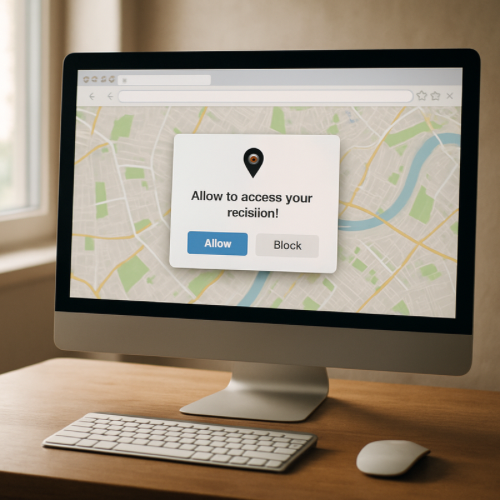
Why Do Some Websites Ask You to Confirm Your Location?
While browsing the internet, you may occasionally see a message asking whether a website can access your location. This usually appears as a small popup in the browser asking permission to determine where your device is located.
Websites request this information because certain services depend on knowing the user’s geographic location.
The Short Answer
Websites ask to confirm your location so they can provide services that depend on geographic information, such as maps, weather updates, or local search results.
How Location Detection Works
Most websites do not know your exact physical address. Instead, they estimate your location using information such as your internet connection, nearby Wi-Fi networks, or device location services.
Your browser then asks permission before sharing that information with the website.
Why Websites Request Location Access
Local Services
Some websites need to know your location to provide relevant information. For example, map services may need your location to display nearby places or directions.
Regional Content
Certain services show different content depending on the country or region where the user is located.
Security Verification
Some systems use location information to confirm that a login attempt is coming from a normal geographic region associated with the account.
When You Might See Location Requests
Location permission messages are most common when using:
- Map or navigation websites
- Weather services
- Delivery or transportation apps
- Local search tools
These services often rely on location data to function properly.
Related System Messages
Websites frequently display messages when information is still being processed or verified. For example, some services display the label processing while requests are still being completed.
Other systems may display messages such as expired when a session or authorization is no longer valid.
The Bottom Line
Location confirmation requests allow websites to provide location-based services and verify certain activities. Browsers always ask for permission before sharing this information, allowing users to choose whether to allow or deny the request.