Why Do Batteries Lose Charge When Not in Use?
What It Is
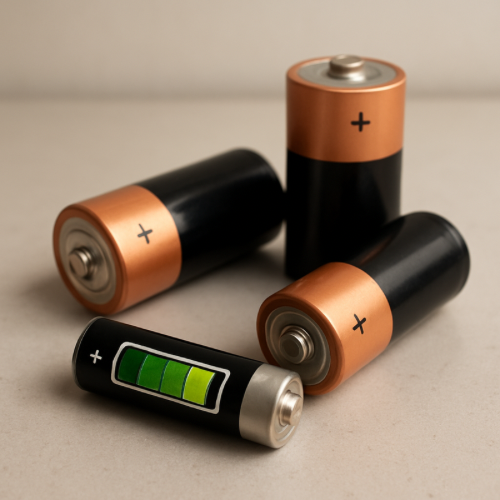
Batteries losing charge while unused is called self-discharge. It happens when stored energy slowly decreases over time.
How It Works
Batteries store energy using chemical reactions. Even when a battery is not connected to anything, small internal reactions continue and slowly release energy.
Why It Happens
Several factors cause batteries to lose charge while sitting idle:
- Ongoing internal chemical reactions
- Minor electrical leakage inside the battery
- Heat increasing reaction speed
Common Examples
- Remote control batteries weakening over time
- Rechargeable batteries losing charge in storage
- Devices showing low battery after long periods of non-use
What to Know Next
Different battery types lose charge at different rates. Some are designed to reduce self-discharge, but none stop it completely.
Simple Cautions
Gradual charge loss is normal and does not mean the battery is defective.
Closing Summary
Batteries lose charge when not in use because internal chemical processes continue to release stored energy over time.