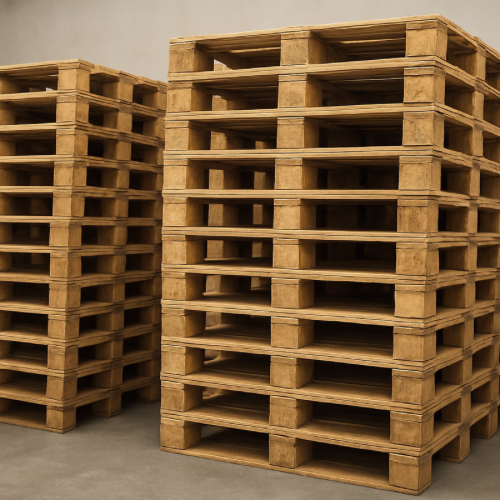
What Determines the Height of Standard Shipping Pallets?
The height of standard shipping pallets is determined by forklift clearance requirements, structural strength needs, and warehouse automation compatibility.
Forklift Entry Clearance
Pallets must provide enough vertical space for forklift tines to slide underneath.
This clearance dictates a minimum base height.
Structural Load Distribution
The pallet’s deck boards and support blocks must elevate the load above the ground.
This spacing prevents crushing and distributes weight evenly.
Material Strength Constraints
If pallets were thinner, they would flex under heavy loads.
Increasing height allows stronger support structures without excessive material use.
Warehouse Racking Systems
Storage racks are designed around standardized pallet dimensions.
Height consistency ensures compatibility with shelving systems.
Automated Handling Systems
Modern distribution centers use conveyor belts and robotic loaders.
Standard pallet height ensures predictable handling by machines.
Shipping Container Efficiency
Pallet height affects how many loaded units fit inside trucks or containers.
Designers balance clearance needs with vertical stacking efficiency.
Design Tradeoffs
Shorter pallets reduce material use but limit forklift compatibility.
Taller pallets increase strength but reduce vertical cargo space.
Logistics Engineering Practice
Pallet height is standardized to support global supply chain operations.
The dimension reflects mechanical handling constraints rather than visual design.