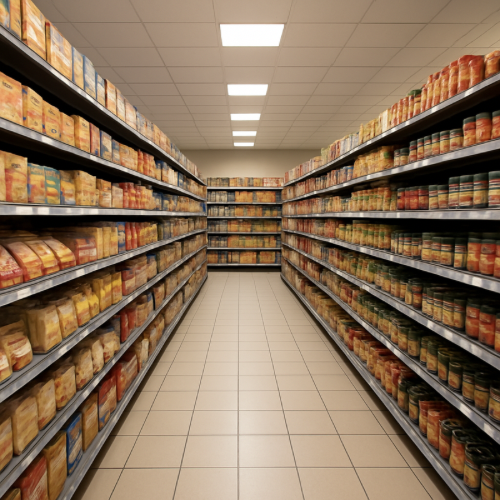
What Determines the Height of Grocery Store Shelves?
The height of grocery store shelves is determined by product packaging dimensions, accessibility standards, stocking efficiency, and retail visibility strategy.
Product Size Standardization
Many food and household goods are packaged within predictable size ranges.
Shelf spacing is adjusted to fit common box, can, and bottle heights efficiently.
Vertical Space Optimization
Retailers aim to maximize products per square foot.
Increasing shelf height allows more tiers, but too many levels reduce accessibility.
Accessibility Guidelines
Building and accessibility standards influence maximum and minimum reachable heights.
Lower shelves must remain usable without excessive bending or strain.
Stocking and Restocking Efficiency
Shelves must allow employees to quickly load products from carts or pallets.
Excessively high shelves require ladders or additional equipment.
Visibility and Sales Strategy
Eye-level placement is often reserved for high-priority products.
Lower or upper shelves are used for bulk or specialty items.
Structural Stability
Taller shelving units require reinforced uprights and anchoring.
The overall height is limited by safety and floor load capacity.
Design Tradeoffs
Shorter shelving improves accessibility but reduces total inventory per aisle.
Taller shelving increases capacity but complicates restocking and navigation.
Retail Infrastructure Practice
Grocery shelf height reflects a balance between efficiency, safety, accessibility, and merchandising strategy.
The dimension is a logistical decision rather than a decorative one.