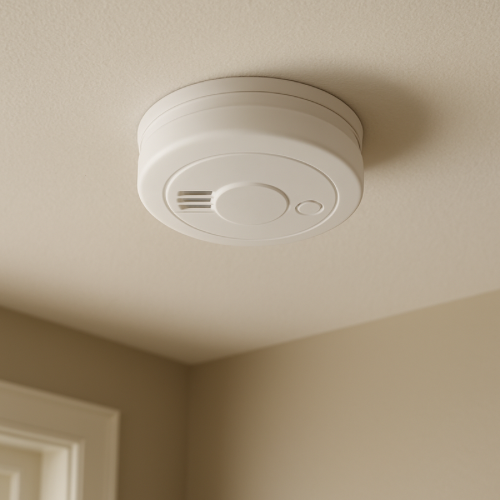
How Does a Smoke Alarm Work?
A smoke alarm works by detecting smoke particles in the air and triggering a loud alert. The alarm warns people of a possible fire so they can react quickly.
Most smoke alarms use one of two detection methods to sense smoke.
What It Is
A smoke alarm is a safety device designed to detect smoke caused by fire.
It operates automatically and sounds an alarm when smoke reaches a certain level.
How It Works
There are two common types of smoke alarms.
- Ionization alarms contain a small electrical current that is disrupted by smoke particles.
- Photoelectric alarms use a light beam that is scattered when smoke enters the chamber.
When smoke interferes with the system, the alarm is triggered.
Why It Works This Way
Different types of fires produce different kinds of smoke.
Using these detection methods allows smoke alarms to sense danger early, even before flames are visible.
Common Examples
- A smoke alarm sounding during a kitchen fire
- An alarm triggered by smoke from burning food
- A detector activating during a house fire at night
- A smoke alarm responding to smoke from candles or fireplaces
What to Know Next
Smoke alarms are powered by batteries, hardwired electricity, or both.
They must be tested regularly to ensure they are working properly.
Simple Cautions
Smoke alarms can be triggered by steam or heavy dust.
Low batteries may cause chirping sounds and should be replaced promptly.
Closing Summary
A smoke alarm works by detecting smoke particles and sounding an alert. This early warning helps people respond quickly to possible fires.