Why Do Delivery Trucks Leave the Engine Running During Stops?
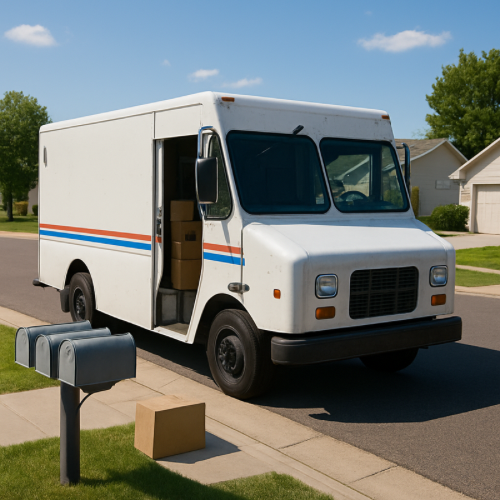
If you watch delivery trucks in neighborhoods, parking lots, or business districts, you may notice that many of them stop, the driver hops out, makes a quick delivery, and the engine keeps running the whole time. At first, this can seem wasteful or unnecessary. If the truck is not moving, why not just shut it off?
The answer is that delivery vehicles are built around constant stop-and-go use. Their routes often involve dozens or even hundreds of short stops in a single shift. In that kind of work, shutting the engine off every single time can create delays, strain equipment, and interfere with systems the driver still needs while making deliveries.
That does not mean trucks always should idle for long periods. But on fast-paced routes with frequent short stops, leaving the engine running can be part of how the system is designed to operate.
The Short Answer
Delivery trucks may leave the engine running during stops because frequent restarting can slow the route, strain vehicle systems, and interrupt functions the truck still needs while the driver is making deliveries.
Delivery Routes Are Built Around Constant Short Stops
A normal passenger car might be parked for long periods between trips. A delivery truck works very differently. It may stop every few houses, every few businesses, or every few minutes. Some routes involve such short stops that the truck is only stationary for a brief moment before moving again.
In that environment, the vehicle is not really switching between “driving mode” and “parked mode” the way a normal car does. It is in a repeated cycle of driving, pausing, delivering, and moving again. The truck is still actively in use, even while stopped.
Because of that, the vehicle system is often managed for speed and continuity rather than full shutdown at every single stop.
Restarting Repeatedly Takes Time
If a driver has to restart the engine at every stop, even a small delay adds up. Turning the key or pressing the ignition button may only take a second or two, but multiply that across dozens or hundreds of stops and it can noticeably affect route time.
Delivery systems are tightly scheduled. Drivers may be expected to complete large numbers of stops in a limited shift. Small delays repeated over and over can reduce efficiency, especially in dense routes where timing matters.
Leaving the engine running during a very short stop allows the driver to get moving again immediately.
Frequent Starts Can Add Wear
Starting an engine is one of the more demanding moments for vehicle systems. The battery, starter motor, and ignition system all work hardest during startup. If a delivery truck had to go through that process constantly all day long, it could increase wear on those components.
For regular passenger use, this is not usually a major issue. For a route vehicle making many rapid stops, repeated restarting can become a bigger operational consideration.
Some modern fleet vehicles are better designed for heavy restart cycles, and some use automatic start-stop systems. But many delivery vehicles still operate under route conditions where keeping the engine on for very short stops is simpler and more practical.
The Truck May Still Need Power While Stopped
When a delivery truck is stopped, it is not always truly inactive. The driver may still rely on power steering support, cabin controls, dashboard systems, route displays, scanners, internal lighting, refrigeration equipment, lift systems, or communication devices.
Some of those functions may continue working with battery power alone, but others operate more reliably when the engine is running and the electrical system is fully supported.
In some trucks, especially specialized delivery vehicles, the engine helps support onboard systems that are part of the work itself, not just the driving.
Climate Control Matters Too
Delivery drivers spend long hours in and out of the vehicle in all kinds of weather. In hot or cold conditions, keeping the engine running may allow the heating or air conditioning system to continue operating between stops.
That can matter more than people realize. If the driver is entering and exiting the truck all day, the cabin loses temperature quickly. Restarting and waiting for the vehicle to heat or cool over and over would be uncomfortable and inefficient.
On some routes, especially in extreme weather, this becomes part of maintaining a workable driving environment rather than a simple convenience.
Some Trucks Are Designed For Route Efficiency, Not Perfect Fuel Use
Passenger vehicles are often evaluated in terms of fuel economy during normal trips. Delivery fleets are evaluated differently. Route efficiency is not just about fuel. It also includes driver time, delivery speed, equipment wear, schedule reliability, and route completion.
That means fleet operators sometimes make tradeoffs. A short period of idling may use some fuel, but if it reduces restart strain, saves time, and helps keep the route on track, the system may still consider it worthwhile.
In other words, the most efficient delivery operation is not always the one that uses the least fuel at every single second. It is the one that balances time, labor, reliability, and vehicle function across the full route.
Why It Is More Common With Short Stops Than Long Stops
There is a big difference between idling for 20 seconds and idling for 20 minutes. On very short residential or curbside stops, leaving the engine running may make operational sense. On longer stops, many drivers or companies shut the engine off to save fuel and reduce unnecessary idling.
That is why you may notice different behavior depending on the route. A driver dropping one package at a nearby porch may leave the truck running. A driver stopping for lunch or loading at a facility will usually turn it off.
The decision often depends on how long the stop is expected to last.
Safety, Policy, and Anti-Idling Rules Can Also Affect This
Some companies have policies limiting when drivers can leave engines running. Some cities or states also have anti-idling rules designed to reduce emissions. In those places, drivers may be required to shut off the engine if the stop lasts more than a certain amount of time.
Vehicle theft risk can also matter. In some areas, leaving a truck running unattended may violate company policy or create an obvious security problem.
So while idling is common, it is not universal. Different companies, routes, vehicle types, and local laws can all change the practice.
Why It Can Look Strange From The Outside
To someone walking by, a delivery truck with the engine running may just look like a parked vehicle wasting fuel. But from the driver’s perspective, that truck is still in the middle of an active work cycle. The stop is simply one small pause in a continuous route process.
That is why it helps to think of delivery trucks less like parked personal cars and more like mobile work systems. They are not just transporting a person from one place to another. They are supporting a workflow with constant short interruptions.
When It Is Normal Vs Unusual
It is normal for delivery trucks to leave the engine running during quick route stops, especially when the driver is stepping away only briefly.
It is less typical for a truck to idle for a long period without a clear operational reason. Long idling may reflect waiting time, climate control needs, specialized equipment requirements, or simply a company practice that differs from others.
The Bottom Line
Delivery trucks leave the engine running during stops because route vehicles operate in a rapid stop-and-go cycle where restarting constantly can waste time, add wear, and interrupt systems the driver still needs. In short-stop delivery work, keeping the engine running can be part of how the route is designed to function efficiently.