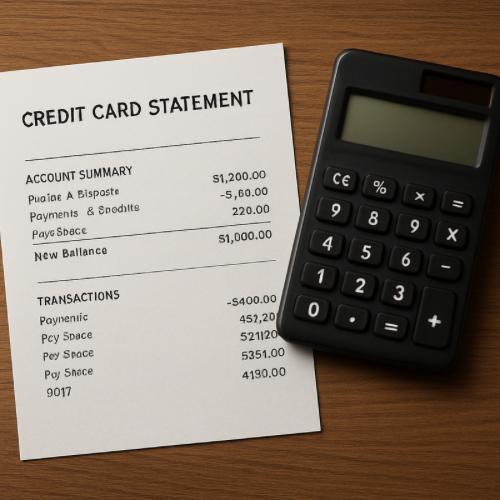
Why Did My Credit Card Start Charging Interest Even Though I Paid?
If your credit card started charging interest even though you made a payment, it usually means the full statement balance was not paid by the due date or the grace period had already been lost.
Credit card interest calculations depend on billing cycles and payment timing, not just whether a payment was made.
How Credit Card Billing Cycles Work
Each billing cycle ends on a statement closing date. The statement balance reflects all transactions during that cycle.
If you pay the full statement balance by the due date, most cards provide a grace period and do not charge interest on new purchases.
Why This Happens (The Mechanism)
Interest accrues based on the average daily balance during the billing cycle.
If you carry any portion of the statement balance past the due date, interest begins accruing daily on:
- The unpaid balance
- New purchases (if grace period is lost)
1. Partial Payment
If you paid less than the full statement balance, interest applies to the remaining portion.
2. Grace Period Loss
If you carried a balance in a previous cycle, your grace period may have been suspended. This causes interest to accrue immediately on new purchases.
This often connects to how ledger and available balances reflect timing differences during transaction processing.
3. Residual (Trailing) Interest
Even if you pay the full balance after interest has started accruing, interest continues accumulating daily until the balance reaches zero.
This is sometimes called residual or trailing interest and is tied to how transactions post during batch settlement cycles, similar to how authorization holds temporarily affect available funds.
Average Daily Balance Method
Most credit cards calculate interest using the average daily balance method. This means:
- Each day’s balance is recorded
- Balances are averaged over the cycle
- The daily periodic rate is applied
If a balance existed for part of the cycle, interest reflects those days even if paid later.
When It’s Normal vs When It’s Unusual
Normal
- Balance was not paid in full
- Payment was made after due date
- Grace period was previously lost
Unusual
- Interest charged despite full on-time statement payment
- Interest appears after account shows zero balance for full cycle
Real-World Example
Your statement balance is $1,000. You pay $950 before the due date. The remaining $50 accrues interest daily. The next statement includes interest charges even though a payment was made.
What This Means for You
Making a payment does not automatically prevent interest. Paying the full statement balance by the due date is what preserves the grace period.
Bottom Line
If your credit card charged interest after you made a payment, the likely cause is partial payment, loss of grace period, or residual interest accumulated before the balance was fully paid.