Why Does My Hotel Room Thermostat Reset on Its Own?
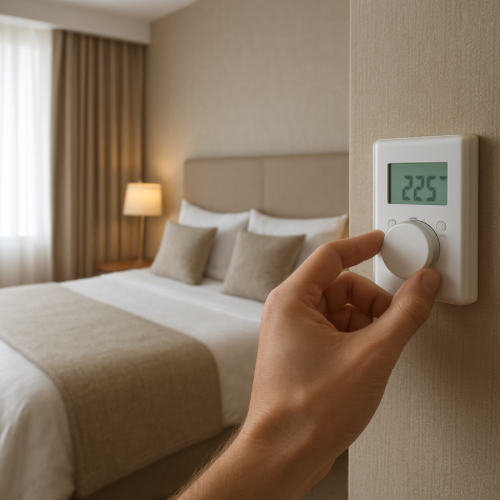
You adjust the thermostat in your hotel room, get the temperature where you want it, and then later notice it changed back on its own. Sometimes it resets after you leave the room. Other times it seems to drift back to a preset temperature even while you are still there.
This can feel like the thermostat is broken or ignoring your settings. In many hotels, though, that behavior is intentional. Hotel room thermostats are often connected to energy-saving systems that limit how long your setting stays in place or how far the room temperature can be adjusted.
The Short Answer
A hotel room thermostat may reset on its own because the hotel uses automatic controls to save energy, detect occupancy, and keep room temperatures within a preset range.
How Hotel Thermostat Systems Work
In a house, a thermostat usually controls one space based mostly on the setting you choose. In a hotel, the thermostat is often part of a larger building system. The room unit may still let you make adjustments, but those adjustments usually happen within limits set by the hotel.
That means the thermostat in your room is not always fully independent. It may be connected to central settings that control minimum and maximum temperatures, fan behavior, or reset schedules.
Some hotel thermostats also include motion sensors, door sensors, or links to the room key system. These features help the hotel reduce heating and cooling when the room appears unoccupied.
Why Hotels Use Automatic Resets
Hotels manage large numbers of rooms at once. If every guest could set the room to any temperature and leave it running continuously, the building would use much more energy.
Reset behavior helps the hotel control costs and reduce strain on the heating and cooling system. Instead of allowing a room to stay extremely cold or extremely warm all day, the system may return the room to a standard operating range.
This is similar to situations where building thermostats lock certain temperature settings so one room does not push the system too far outside its intended range.
Occupancy Sensors Can Trigger a Reset
Many hotels use occupancy sensors to decide whether someone is still using the room. If the system does not detect movement for a while, it may assume the room is empty and change the temperature automatically.
For example, if you leave for dinner or even sit still for a long time, the thermostat may switch into an energy-saving mode. When you return or start moving again, it may take time for the system to respond.
This is part of the same kind of logic used when hotel TVs turn off automatically after a period of inactivity. The system is trying to reduce energy use when it thinks the room is not actively being used.
Door and Key Card Systems May Also Be Involved
Some hotels tie room climate controls to the door system or the key card slot. If the room is not occupied or the card is removed, the thermostat may switch to a default mode.
This prevents the air conditioning or heat from running at full power while the guest is away.
In some buildings, the same room management system that controls the thermostat also helps manage room access, which is part of why hotel key cards can behave according to programmed stay settings.
Why the Temperature May Not Match What You Set
Even if the thermostat display shows your chosen number, the room may not stay there exactly. Some hotel thermostats let you select a target, but the actual system still works within a restricted range behind the scenes.
For example, if you set the room to 65 degrees, the system may only allow it to cool to a higher minimum temperature. Or it may briefly follow your setting and then drift back toward the hotel’s preset comfort range.
This can make it seem like the thermostat is resetting, even if the display is not obviously changing.
Real-World Example
For example, you might set your hotel room to 68 degrees before going to sleep. During the night, the thermostat quietly shifts back to 72 because the hotel’s control system is programmed to stay within a certain range. Or you leave the room for a few hours, and when you come back the thermostat has returned to a default setting because the room was marked unoccupied.
From your point of view, it looks like the thermostat changed its mind. From the hotel system’s point of view, it followed its programmed rules.
What to Expect
If the thermostat is resetting because of normal hotel controls, the room will usually continue heating or cooling within a limited range rather than shutting off completely. You may be able to adjust it again, but the change may not last if the system is designed to return to a preset level.
If the room is too warm or too cold for too long, the front desk may be able to override the setting, send maintenance, or move you to another room. Some hotel thermostats also have hidden settings or occupancy modes that staff can check.
A Simple Way to Think About It
Think of a hotel thermostat like a car with speed limits built into it. You can still control it, but only within the boundaries the system allows. The thermostat is not fully ignoring you—it is just operating inside rules you cannot always see.
When It’s Normal vs Unusual
It is normal for hotel room thermostats to reset or drift if the hotel uses occupancy controls, temperature limits, or central energy management.
It is less normal if the room never responds at all, resets constantly within minutes, or cannot maintain a comfortable temperature no matter what you do. In that case, there may be a maintenance issue rather than a normal system control.
The Bottom Line
Your hotel room thermostat may reset on its own because it is often part of a larger hotel energy system, not just a standalone room control. Occupancy sensors, temperature limits, and central presets can all cause the setting to change automatically, even when it feels like the thermostat should simply stay where you put it.