Why Do Fire Alarm Control Panels Use Zone Labels Instead of Room Names?
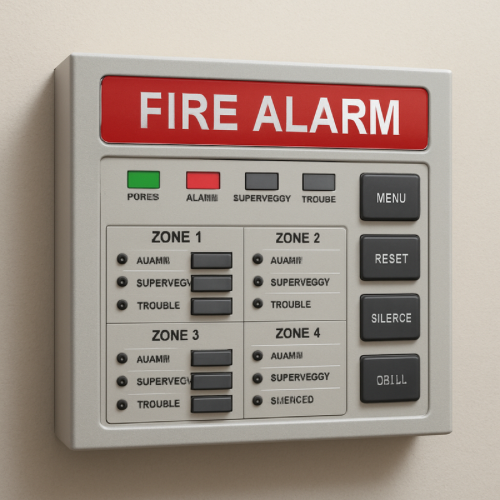
Fire alarm control panels use zone labels instead of individual room names because zones simplify system layout, reduce complexity, and make alarms easier to identify quickly.
How Fire Alarm Zones Work
A zone represents a group of devices connected to the control panel as a single circuit. Multiple detectors, pull stations, or sensors can be assigned to one zone.
The panel identifies which zone is active rather than which specific device.
Reducing System Complexity
Labeling every individual room would require more wiring, programming, and maintenance. Zone-based design limits the number of identifiers the system must track.
This makes large systems easier to build and manage.
Improving Reliability
Fewer labels and circuits reduce potential failure points. If one device malfunctions, the system still reports activity within the correct zone.
The panel continues to provide useful location information even during partial faults.
Faster Interpretation During Alarms
Zone labels are designed to correspond to areas such as floors, wings, or sections of a building. This allows responders to narrow down alarm locations quickly.
The system prioritizes speed over exact room identification.
Standardized Fire Protection Design
Zone-based labeling is a long-established practice in fire alarm engineering. It balances clarity, durability, and system efficiency.
The approach remains common across many types of buildings.