Why Do Cutting Boards Warp Over Time?
What It Is
Warping happens when a cutting board bends or twists instead of staying flat.
How It Works
Most cutting boards are made from wood or wood-based materials. These materials absorb moisture and release it as they dry. If one side of the board absorbs or loses moisture faster than the other, the board can change shape.
Why It Happens
Warping usually develops because moisture and temperature affect the board unevenly:
- Water soaking into one side more than the other
- Drying with one side exposed to air
- Heat speeding up moisture loss on one surface
Common Examples
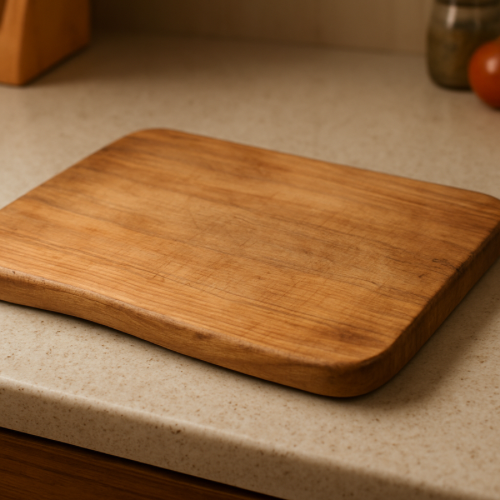
- A board that rocks on the counter
- Edges lifting after washing
- A board that dries curved instead of flat
What to Know Next
Repeated wetting and drying increases the chance of warping, especially if the board is not evenly exposed to air on both sides.
Simple Cautions
Warping is common and usually related to moisture exposure, not a defect in the cutting board.
Closing Summary
Cutting boards warp over time because uneven moisture and drying cause the material to expand and contract at different rates.