What Makes Hinged Laptop Screens Stay at a Fixed Angle?
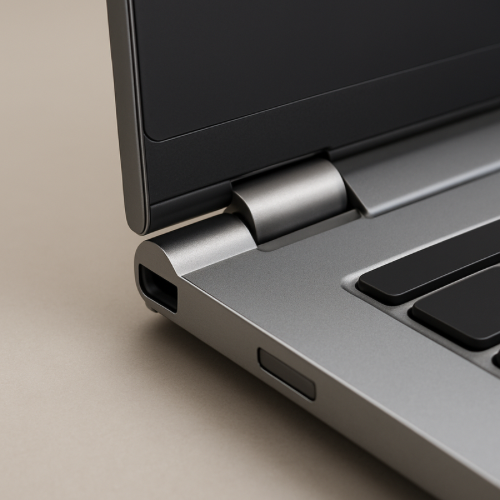
Laptop screens stay at a fixed angle because the hinge mechanism creates controlled resistance that holds the display in place once positioned.
Friction-Based Hinge Design
Most laptop hinges rely on friction rather than locking teeth. Internal surfaces press against each other to resist movement.
This resistance increases as the hinge is tightened.
Internal Tension Components
Springs or tension elements inside the hinge apply constant force to the rotating parts.
This force prevents the screen from falling forward or backward.
Balancing Movement and Stability
The hinge is tuned to allow smooth movement when adjusted, but strong resistance when released.
This balance lets users set the screen at many angles.
Wear-Resistant Materials
Hinge components are made from hardened metals or coated surfaces to maintain consistent friction over time.
This helps the hinge hold its tension through repeated use.
Standard Portable Device Design
Friction-based hinges are widely used because they require no locking mechanism and allow continuous adjustment.
The design supports durability and ease of use.