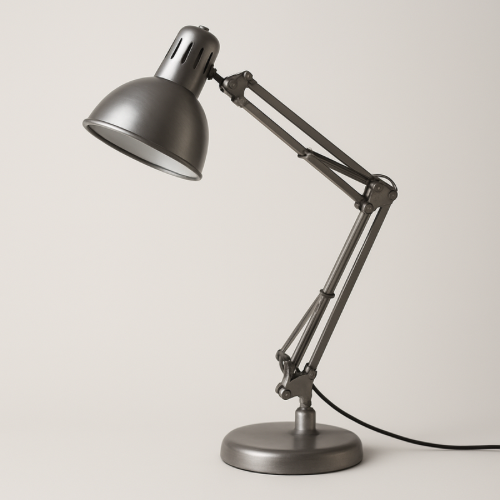
What Controls the Resistance in Adjustable Desk Lamps?
Adjustable desk lamps stay in position because their arms and joints use springs, friction surfaces, or counterbalances to control movement resistance.
Spring-Based Counterbalance Systems
Many adjustable lamps use internal springs to offset the weight of the lamp head.
The spring tension counteracts gravity and helps hold the lamp in place.
Friction at Pivot Joints
Joints in the lamp arms are tightened to create friction between moving parts.
This friction resists unwanted movement once the lamp is positioned.
Multiple Articulated Segments
Using several shorter arm segments distributes weight and reduces stress at any single joint.
This allows smoother adjustment and better stability.
Material and Surface Design
Metal washers, bushings, or textured surfaces are used to maintain consistent resistance.
These components limit slipping during use.
Common Lighting Hardware Design
Adjustable desk lamps rely on simple mechanical resistance rather than locks or electronics.
This design allows repeated repositioning while maintaining control.