Why Did My Bank Freeze My Account After a Large Transfer?
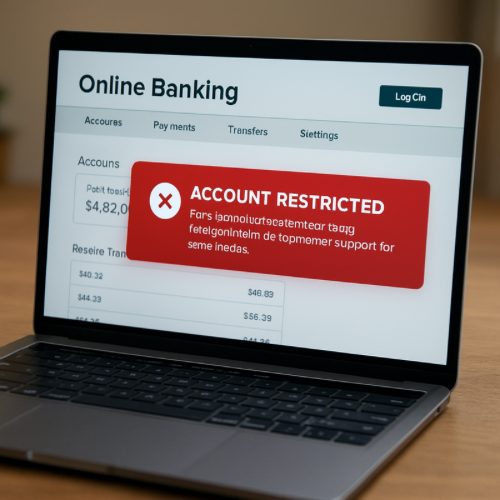
If your bank froze your account after a large transfer, the most common reason is automated fraud monitoring or compliance review. Modern banking systems continuously analyze transactions for unusual activity, especially when large sums move quickly between accounts.
An account freeze does not automatically mean wrongdoing. In most cases, it reflects risk-scoring thresholds built into the bank’s monitoring systems.
How Banks Monitor Transfers
Every electronic transfer — whether ACH, wire, or peer-to-peer — passes through automated review systems. These systems evaluate:
- Transfer amount
- Destination account history
- Frequency of transfers
- Geographic patterns
- Device and login consistency
If a transaction significantly deviates from your normal behavior, the system may flag it for additional review.
Why Large Transfers Trigger Account Freezes
1. Anti-Money Laundering (AML) Requirements
Banks are required by law to monitor suspicious activity under anti-money laundering regulations. Large or unusual transfers can trigger internal reporting obligations.
2. Sudden Behavior Changes
If you normally move $500 at a time and suddenly transfer $20,000, the system detects a behavioral shift. That change increases risk scoring.
3. New Payee Risk
Sending a large transfer to a newly added external account increases fraud risk. Banks often apply stricter monitoring to first-time destinations.
4. Structured Activity Patterns
Multiple transfers just below common reporting thresholds may also trigger review. Systems analyze patterns, not just single amounts.
5. Account Takeover Signals
If the large transfer follows password changes, new device logins, or multiple failed login attempts, the bank may freeze the account preventively.
Why the Freeze Can Affect the Entire Account
When a transfer is flagged, banks sometimes restrict the entire account rather than just the transaction. This prevents additional funds from leaving while the review occurs.
This differs from an authorization hold, which temporarily reserves funds for a purchase. An account freeze restricts activity entirely until review completes.
How This Differs From a Declined Transfer
A declined transfer stops a transaction before completion.
An account freeze happens after a transaction is submitted but before the bank finalizes its risk decision.
This is also structurally different from cases where a large deposit is flagged for review, which involves incoming funds rather than outgoing transfers.
What Happens During Review
Once flagged, the transfer may enter a manual or automated review queue. During this time, the bank may:
- Verify identity
- Confirm source of funds
- Validate the receiving account
- Check for fraud alerts
Some reviews resolve within hours. Others may take several business days depending on complexity.
Real-World Example
You log in from a new device and initiate a $15,000 external transfer to a newly linked account. Because the transaction combines multiple risk signals — new device, new payee, high amount — the system temporarily freezes your account pending verification.
When It’s Normal vs When It’s Unusual
Normal
- Freeze resolves after identity verification
- Bank contacts you for confirmation
- Transfer completes or cancels after review
Unusual
- Freeze continues beyond stated review period
- No communication from the bank
- Funds are permanently removed without explanation
Why Banks Use Automated Freezes
Fraud losses from account takeovers can be significant. Automated freezes reduce the risk of funds leaving before verification occurs.
These systems prioritize prevention over convenience, which can make legitimate transactions feel disruptive.
What This Means for You
An account freeze after a large transfer usually reflects automated fraud protection rather than an accusation. Banks are required to monitor high-risk activity and act quickly when thresholds are crossed.
Bottom Line
If your bank froze your account after a large transfer, the transaction likely triggered automated compliance or fraud-detection systems. Most freezes resolve once identity or transaction details are verified.